Why Spring Eggs Are So Good For You

By Matt Dolkas,
Associate Director of Communications
April 17, 2025
I’m embarrassed to admit that for years I believed all eggs were created equal. I remember shopping the egg section of our local Novato grocery store with discerning skepticism. Was there really that big of a difference in egg quality? Organic vs. pasture-raised? Grade A vs. Grade AA? What does “free range” even mean? Do I need a degree for this? Suffice it to say, you just don’t know what you don’t know.
A few years back, our family started keeping a small flock of hens as was the trend in the pandemic-era days of washing groceries, toilet paper shortages, and supply chain chaos. We’ve learned a lot in the last few years, rotating our mobile coop to new paddocks every few weeks—a miniature version of what the professional egg producers in Marin County are doing on a much larger scale. And this has given us an intimate understanding of our birds, their seasonal rhythms, and—most deliciously—the special magic of spring eggs.
The magic begins in the soil. This time of year, as the soil temperatures climb above 50°F, billions of dormant soil microorganisms, bacteria, and fungi awaken and multiply, releasing a cascade of previously inaccessible nutrients into the soil. You can see this spring-time transformation in the growth of young grasses and plants, which eagerly produce protein-rich leaves come spring. The hills are literally alive with the sound of…millions of microorganisms.
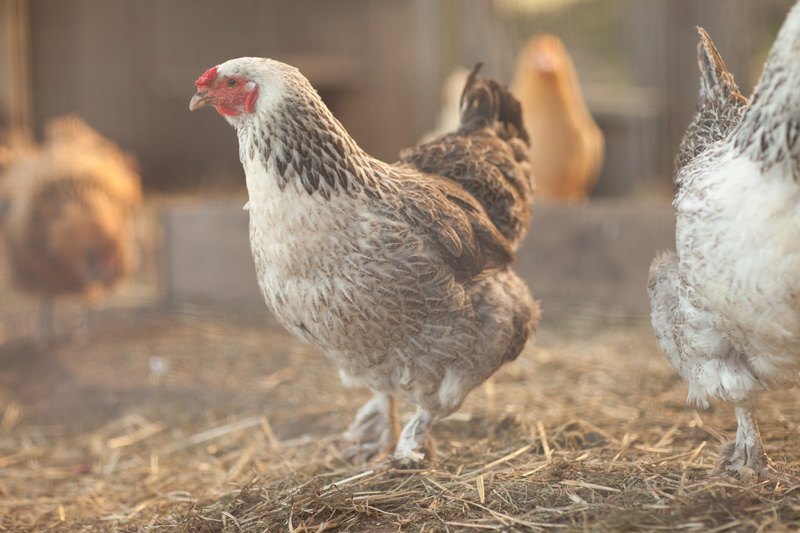
In the past few weeks, our birds have been feasting on this natural bounty. Beyond tender young grasses, they consume emerging insects, earthworms, and our discarded kitchen scraps—all contributing to eggs with deeper orange yolks, firmer whites, and noticeably superior flavor. But don’t take my word for it, the proof is in the academic pudding and the scientific evidence for pasture-raised egg superiority is quite compelling:
• Twice as much vitamin E compared to eggs from caged hens
• Twice as many long-chain omega-3 fatty acids
• 2.5 times more total omega-3 fatty acids
• Less than half the ratio of omega-6 to omega-3 fatty acids (a healthier balance)
• 38% higher vitamin A concentration
• Eggs from hens that foraged on grass had 23% more vitamin E than eggs from hens that foraged on clover
Avian Flu and the Critical Role of Local Production
I never expected our hobby of backyard chicken ranching to coincide with a national supply crisis, but this spring has been a wake-up call for all of us who care about food security. If you’ve bought eggs in the last few months, I’m sure you’ve felt the impact of increasing egg prices—a direct result of the avian flu that’s sweeping around the world.
The numbers are staggering. Since the beginning of the year, we’ve lost 30.3 million egg-laying birds across nine states, with 40 separate outbreaks confirmed from California to Pennsylvania. It’s devastating for these food producers and so much of the agricultural community. But if there’s a silver lining to this crisis, it’s been how pasture-based operations have weathered the storm.
While pasture-based operations aren’t immune to the virus, they’ve demonstrated a surprising fortitude against the outbreak — their birds’ varied diets of insects, seeds, and fresh grass create robust immune systems that industrial feed simply can’t match. And when given space to roam, chickens naturally maintain the distance that commercial operations must enforce through artificial barriers.
What we’re experiencing in this crisis isn’t just an egg shortage—it’s a wake-up call about the vulnerabilities we’ve engineered into our industrialized food system. So, the next time you purchase eggs, buy from one of our local farms. Their eggs are not only more delicious and nutritious, they also represent a blueprint for a more resilient future.
Ready to taste the seasonal difference for yourself?
Visit our Buy Local page to find pastured egg producers near you.