Jennifer Beretta: What It Takes To Keep A Dairy Thriving

By Matt Dolkas,
Associate Director of Communications
February 25, 2026
“I sometimes have a hard time remembering my phone number. But I can remember numbers from my cows’ ear tags from like 15 years ago.” She pauses. “Priorities.”
Jennifer Beretta is sitting in the cab of her Ford F-250, explaining this in the straightforward way she talks, like someone who knows exactly what needs to be said and goes right to it. “The cows are an extension of my family, my heritage.”
That kind of commitment is what keeps dairy operations thriving. And thriving dairies create conditions for all of Marin agriculture to flourish, intensive operations that generate the demand needed to keep local feed mills running, work that sustains vet practices, volume that maintains processing infrastructure, the connective tissue of Marin’s farming community.
Jennifer’s family has two dairies. For her day job, she helps run her family’s Santa Rosa dairy—nationally recognized for its exceptional land stewardship and sustainability—and, in her free time, she manages grants, planning, and strategy for the family’s Marin County operation, the Dolcini Jersey Dairy, spanning 3,300 acres in the Nicasio Reservoir and Hicks Valley area.
“That’s what it takes to keep these dairies running, lots of hands, lots of family members working to support the greater whole,” she says. This includes the dairy workers, many from Marin’s Latino community, whose daily care keeps operations running, part of the broader agricultural workforce that MALT’s stewardship grants help support.
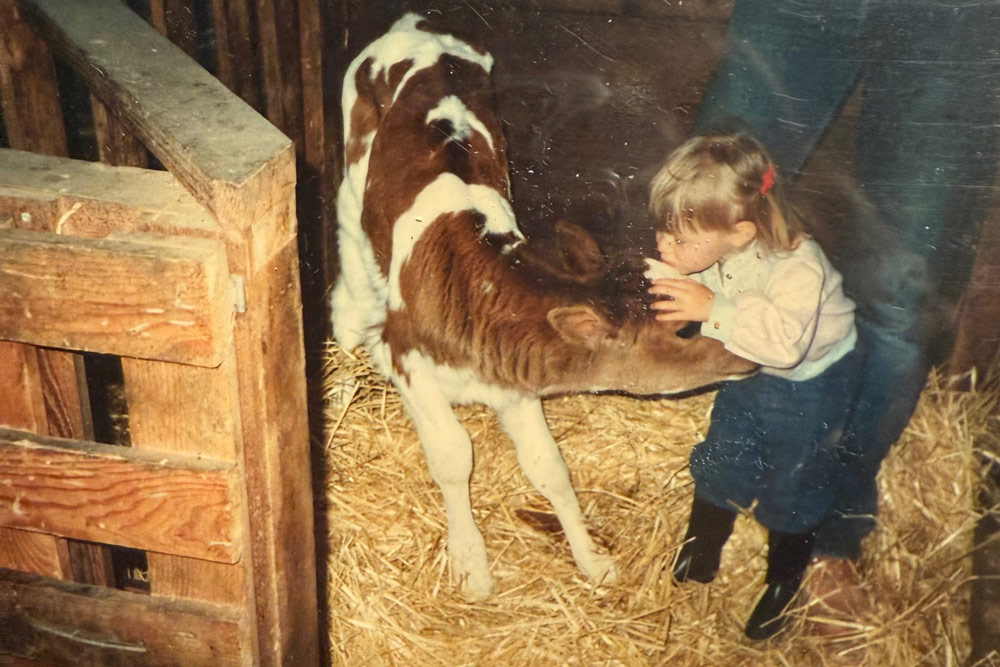 Jennifer with a newborn calf on the family dairy.
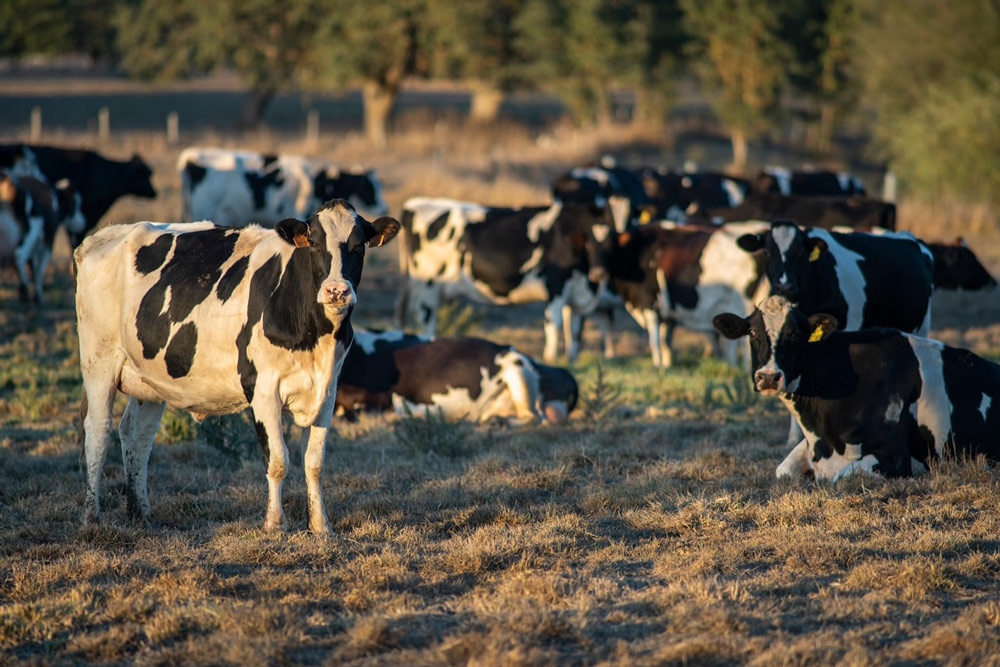 Holstein cattle at the Beretta dairy.
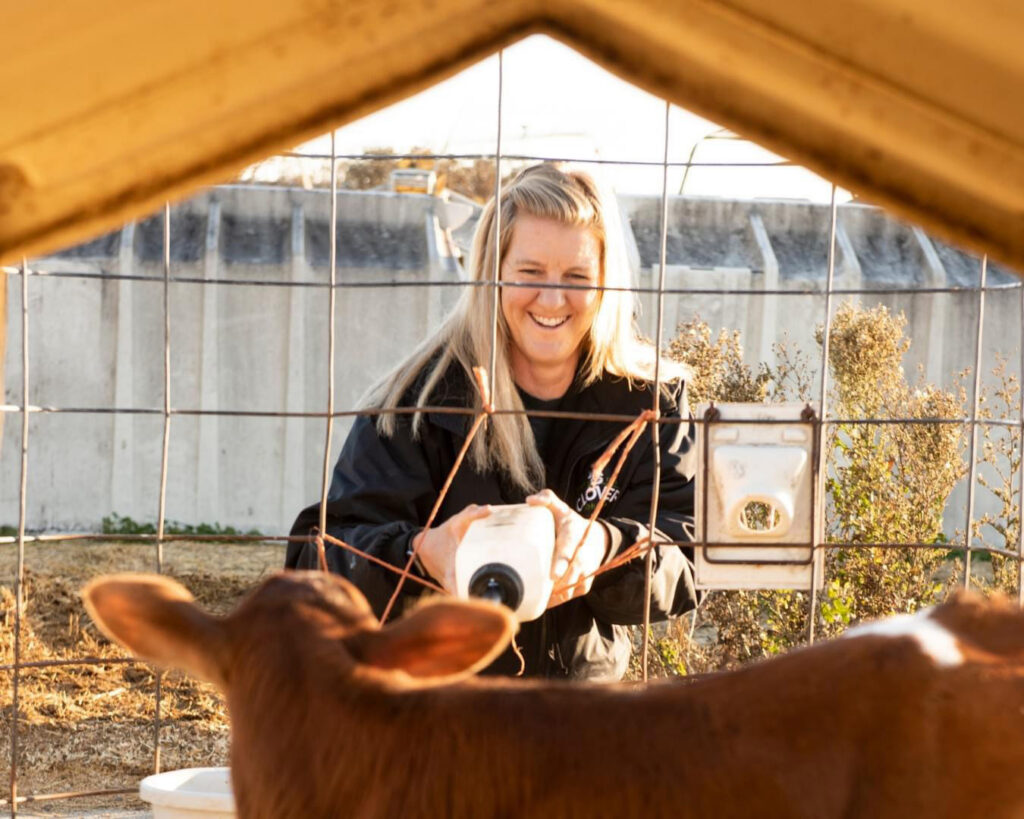 Jennifer bottle-feeds a Jersey calf at the Dolcini dairy — the kind of daily care that keeps a family operation running.
When Working Lands Need Work
Well-managed ranches need reinvestment. Infrastructure degrades, fences fail, invasive species take hold. Even after generations of careful land stewardship, parts of the land need revitalizing.
In 2024, parts of the family’s Marin ranch had become overrun with invasive French broom that threatened to displace native grasslands, increase wildfire risk, and diminish biological diversity. The family needed resources to address these challenges, but couldn’t afford the work on the dairy business’s thin margins.
Later that year, the family was awarded a $40,000 grant from MALT’s small grants program that was paired with funding from the Natural Resource Conservation Service (NRCS), an example of how MALT’s investments can catalyze larger conservation outcomes, turning every donor dollar into multiple dollars of on-the-ground impact.
“Once it’s gone, it’s gone. Dairies don’t just come back.”
The combined funding supported comprehensive restoration work across the ranch: removing invasive species, seeding with native grasses, adding compost to pastures, and improving livestock water systems. New fencing also enables better rotational grazing, which improves both pasture health and the land’s ability to support wildlife.
The result is a ranch that works better—not just for the cows and for the family, but for the larger community. When stewarded well through grazing, our local grasslands better hold carbon in their soils, filter our drinking water, provide wildlife habitat, and reduce wildfire risk—the open spaces that define our community’s character and quality of life.
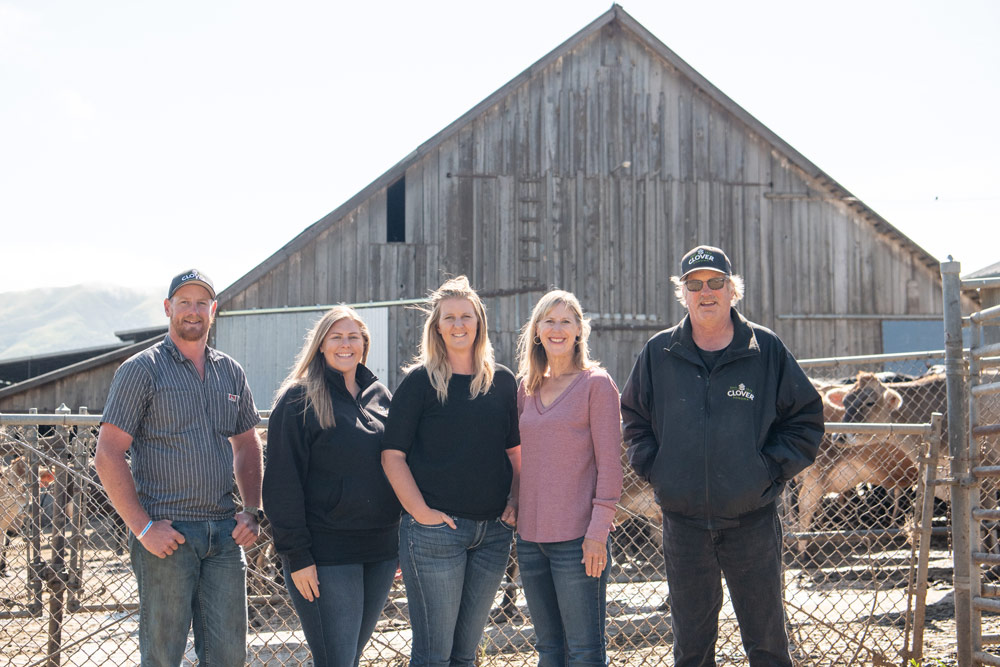
The Beretta family at the Dolcini Jersey Dairy in Marin County, where the family has farmed since the 1880s.
A Story of Continuity
Jennifer represents a new kind of agricultural leader—someone who moves fluidly between the practical and the strategic, bringing crucial perspective to conservation work from people actually living this reality: those who understand that you cannot separate the economic health of agriculture from its environmental benefits.
It’s a fitting role for someone from a family whose roots run deep in Marin’s agricultural tradition. The Dolcini family has been farming in Marin County since the 1880s. Her grandfather’s cousin, Ed Dolcini, served as one of MALT’s first Board Chairs from 1985 to 1987. Now Jennifer carries that tradition forward, though carrying it hasn’t always been simple.
That tradition nearly broke in 2010. Facing tough economics and an uncertain future, the family made a difficult choice: convert to organic, or sell the cows entirely. They went organic, shipping their first load of organic milk on her grandfather Calvin’s birthday. He passed not long after. “He got to see the dairy keep going,” Jennifer says. “That was one of those things.”
It was a hard transition. Watching years of carefully bred genetics walk off the property, cows you knew, knowing the future was the right direction but grieving what was leaving anyway. Fourteen years later, there are new lineages. Her mother has names for most of them.
What It Takes
Jennifer doesn’t take a paycheck from the Marin dairy. She manages the grants, the organic paperwork, the planning because someone has to, and she understands what’s at stake if no one does.
Her nephew is 14 and has already announced he wants to take her job when he turns 18. “I’m like, cool, I’ll retire,” she laughs. “Four more years.” But she means it—that’s exactly why the work matters. You make sure it’s there for whoever comes next.
“I got to see the generations before us work so hard to keep it in the family,” she says. “That’s why I work so hard at what I do—to make sure this is here for the next generation. For all of us.”
Support the Next Generation of Agricultural Leaders
Help fund the work that bridges generations and builds resilience on working lands.