Dayna Ghirardelli: One Woman’s Fight for North Bay Farms

By Matt Dolkas,
Associate Director of Communications
February 11, 2026
On a warm January afternoon, the cattle move through the chute one by one at the MALT-protected Duncan Ranch. Each animal gets checked—vaccinations, a quick health assessment—before rejoining the herd.
Dayna Ghirardelli moves efficiently alongside her husband Louie, her brother Howard, and their nephews, administering injections and keeping careful count as each animal passes through. Friends have shown up to help with the work, the way ranching families have always done.
“They give and they take,” Dayna says, watching the cattle move back to pasture. It’s a simple observation about managing a herd, but it captures something essential about ranching—the reciprocal relationship between people and land, between what you put in and what you get back.
It’s a relationship Dayna has spent her career protecting—first as a dairy specialist, then in producer relations, and now as Executive Director of the Sonoma County Farm Bureau. Last fall, that work took on new urgency when a ballot measure threatened to shut down ranching operations like this one across Sonoma County.
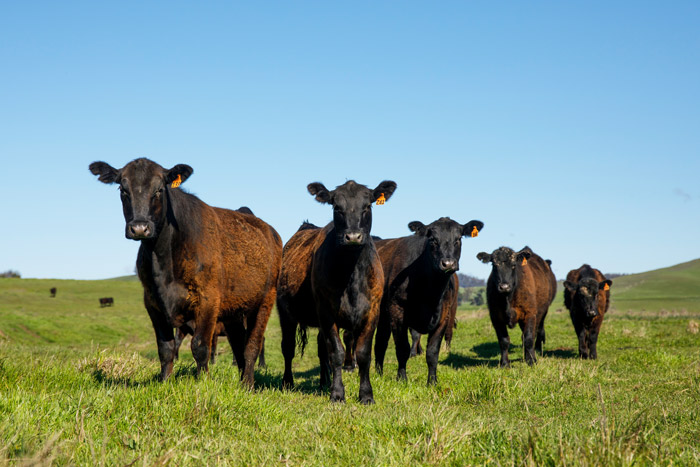 Black Angus cattle at Duncan Ranch, part of the ranching operations threatened by Measure J
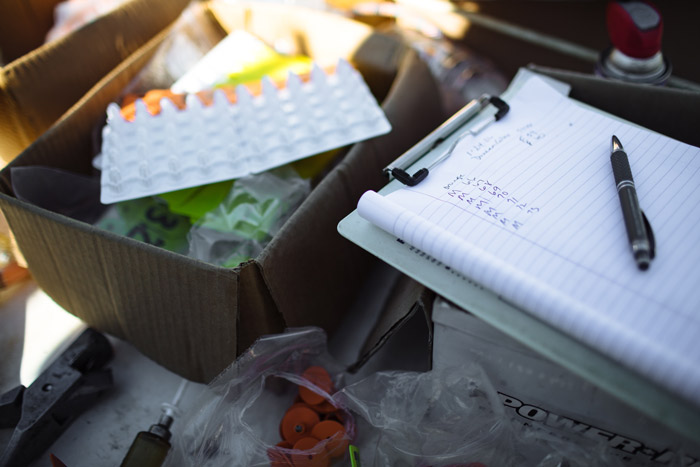 Veterinary supplies and cattle count records during processing day at the Duncan Ranch.
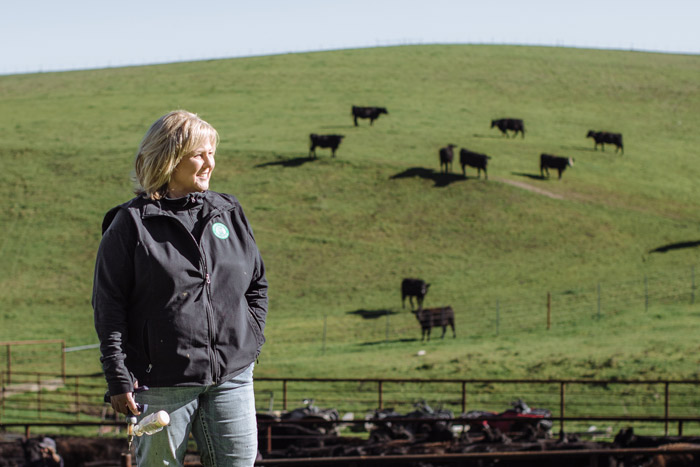 Dayna Ghirardelli surveys the herd at Duncan Ranch, where cattle graze across rolling Marin County pastures her family has permanently protected with a MALT conservation easement. Photos: Michael Woolsey
The Threat of Measure J
Measure J appeared on ballots with deceptively simple language: ban concentrated animal feeding operations in Sonoma County. Proponents framed it as targeting industrial agriculture. The reality cut much deeper: family farms—many organic, some over a century old—would be forced to close or drastically reduce their herds within three years.
These weren’t anonymous corporate operations. Weber Family Farms, raising chickens in Petaluma for four generations. Small dairies with a few hundred cows, many supplying milk to Clover and Straus. Ranches that had shaped the agricultural landscape of Sonoma County since before most residents were born.
University researchers projected half a billion dollars in economic damage. But the ripple effects would extend far beyond the targeted farms. Truckers would lose routes. Feed suppliers would lose customers. Veterinarians would lose their practices. The agricultural infrastructure supporting small and large farms across the North Bay would begin to crumble.
Dayna learned about the petition drive in the fall of 2023. She knew the organization behind it—Direct Action Everywhere had been confronting local farms for years, staging break-ins and protests. “I knew right then this was going to go to the ballot,” Dayna says, “and we need to get on it.”
Organizing the Response to Measure J
Dayna grew up at the MALT-protected McDowell Ranch—her family raised heifers there while running their dairy operation over the county line in Sonoma. When her father and uncle split their operation in 2016, the family acquired Duncan Ranch and permanently protected both properties—together, over 1,200 acres with MALT conservation easements.
Her years working with dairy operations across California had given her something invaluable: relationships. She knew farmers, knew their operations, knew what they were up against. And she’d witnessed the dairy industry contract dramatically—Sonoma County once had over 100 dairies. Today, fewer than half remain.
What she built next mirrored the work of conservation trailblazers like Phyllis Faber and Ellen Straus, who founded MALT in 1980 by bringing together ranchers and environmentalists. Dayna assembled her own unlikely alliance.
Over months of organizing, she presented to more than 65 organizations. City councils took formal positions against the measure. Political opposites found common ground: Republicans and Democrats, farmers and labor unions, traditional agriculture advocates and environmental groups.
“We may look at things differently,” Dayna says, “but at the end of the day, we all know that, fundamentally, we want the same thing, and that is to make sure that agriculture stays intact, that we promote and protect our family farms.”
People who knew Dayna understood why the coalition held together. There’s a steadiness to how she works—a genuine warmth that makes people feel heard rather than lectured. Ranchers who’d never engaged publicly began showing up to meetings. Environmentalists who’d viewed large-scale agriculture with suspicion started asking questions instead of making assumptions.
Social media became an unexpected front. Farmers opened their gates online, answering questions about their operations, explaining practices that seemed mysterious or troubling to urban residents. When people outside agriculture started defending farms in comment threads, Dayna recognized momentum shifting.
“You started to see people who weren’t necessarily part of agriculture start to answer questions in defense of agriculture,” Dayna recalls. “That’s when I knew it was resonating.”
A rare display of northern lights illuminates the sky over the MALT-protected McDowell Ranch. Photo: Jeff Lewis
85 Percent
Campaign spending for No on Measure J topped $1.5 million—extraordinary for a county measure. The attention reflected what was at stake: if Measure J passed, similar measures would follow in other California counties.
On election night, voters rejected Measure J by 85%. The overwhelming margin affirmed what the coalition had been building toward—a shared understanding that protecting local agriculture means supporting the families who actually do the work.
“The campaign exposed a troubling gap. ‘I think we’ve become really great at marketing our food,’ Dayna reflects. ‘But we haven’t done a good job educating. We can make people feel good. But we stop there instead of telling the whole story.’
Measure J forced those fuller conversations—about what it actually takes to produce food, about the realities of managing animals and land. ‘When people understand what’s really at stake,’ Dayna says, ‘they show up.'”
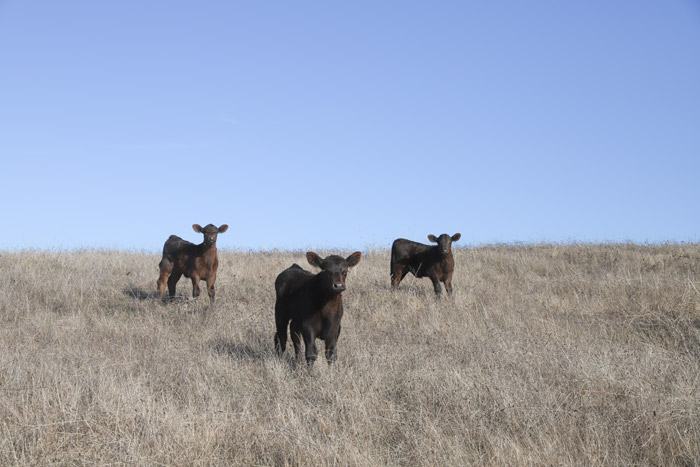 Black Angus calves at Duncan Ranch in late summer.
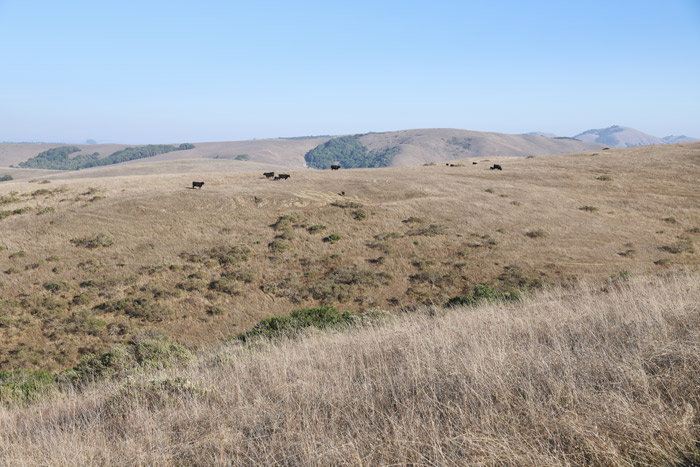 Cattle graze across Duncan Ranch’s summer-dry grasslands, the type of working landscape threatened by Measure J.
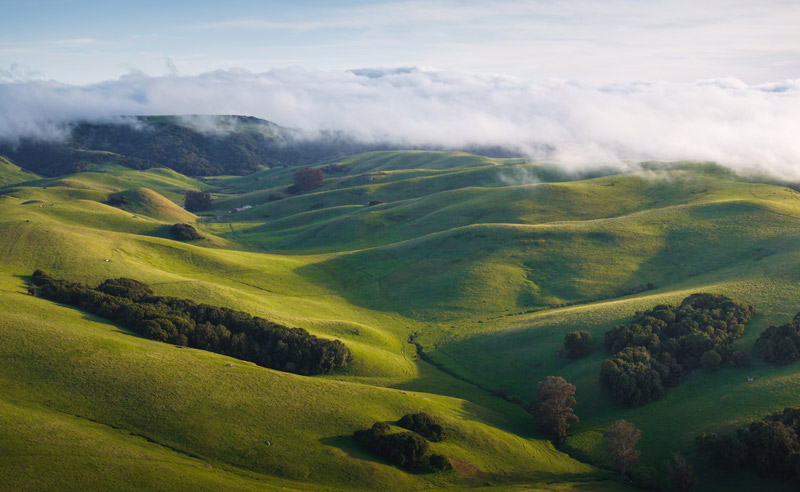 Aerial view of Duncan Ranch’s rolling hills, part of over 1,200 acres Dayna’s family permanently protected with MALT conservation easements. Photo: Jeff Lewis
The Work Ahead
Six months after the vote, Measure J supporters acknowledged publicly what Dayna had suspected all along: the campaign was research. A way to test messaging and identify strategies for future ballot measures in other counties. Direct Action Everywhere has stated its goal: eliminate animal agriculture by 2040.
Agriculture here works as a system – something Dayna has understood her entire career. Ranches depend on feed suppliers and veterinarians who need enough farms to stay in business. Dairies provide the volume that keeps processors running. The grasslands that those operations maintain protect watersheds and provide wildlife habitat. Lose enough farms, and the entire network starts to unravel—ecologically, economically, and socially.
Her work continues: keeping those connections strong, reminding people what’s at stake, showing up when the next threat emerges.
“The threat is still here,” Dayna says. “It may not be an imminent threat through a ballot measure today, but the threat is still here always.”
Dayna Ghirardelli’s coalition-building to defeat Measure J protected the kind of family ranches MALT has worked to preserve for 46 years. Your support helps us continue safeguarding Marin’s agricultural landscape and the families who steward it.