Why I Wrestle Goats Daily, Despite All Rational Thought

By Matt Dolkas,
Associate Director of Communications
July 15, 2024
For the last few years, I’ve been wrestling goats on a daily basis.
It’s not that my doctor recommended more physical exercise or that I necessarily enjoy a daily dose of goat herding. My family is fortunate to have some land in western Novato and we’ve been using goats to help manage the land’s wildfire fuels. Wrestling goats to and from their paddocks of electric fencing has become a daily practice. Some folks do goat yoga, I prefer goat wrangling.
It’s pretty incredible what a small herd of goats can do to a thick stand of invasive plants. Like so much of the North Bay, our land is being taken over by invasive species, primarily French broom (Genista monspessulana). It’s actually a beautiful plant with a showy display of yellow flowers each spring. Back in the day, it was sold in local nurseries until it escaped from folk’s backyard landscaping and has slowly begun consuming much of the state.
The trouble with invasive plants like French broom is that, if left untended, it grows into a thick ladder fuel—giving a ground fire an easy way of climbing into the forest canopy with the potential of becoming a catastrophic wildfire. To be good stewards of this land, we have to keep the fuels low to the ground and beat back the broom. As I’m learning, good land stewardship is the key to mitigating the risk of catastrophic wildfires and, for lucky folks like myself, it’s a chance to wrestle goats.
Every few weeks, we move the goat’s electric fence paddock to new ground. Regularly rotating goats to fresh pasture promotes soil health, reduces parasite loads, and enhances biodiversity, in addition to reducing wildfire fuels.
I’m embarrassed to admit that for a while I was attempting to pull each invasive plant by hand. Suffice it to say, you don’t know what you don’t know and had I kept at it, I likely would have been successful with that strategy sometime in the next three hundred years. Somewhere along the line I realized I needed help, so I turned to one of mankind’s most profound technological innovations—domesticated livestock.
Unleashing our small herd of goats into their first paddock of French broom—standing ominously in places at over eight feet tall—was like opening the floodgates of the proverbial dam. In less than a week, they consumed more invasive plant material than I could have ever conceived, so much so that they began to reopen the land and new corners of the property were now visible. But what I didn’t realize at the time was the ecological cascade of changes we had set underway, a turning of the tide.
As the goats ate down the invasive broom, they began exposing sunlight on the forest floor, reawakening a whole host of plant life lying dormant in the soil. Trampling the ground also helped to accelerate the decomposition of leaf litter, breaking up the hardened soil and further stimulating the growth of dormant grasses. Unintentionally, we had begun moving the plant community in a more complex and biologically diverse direction. It’s like we knew what we were doing.
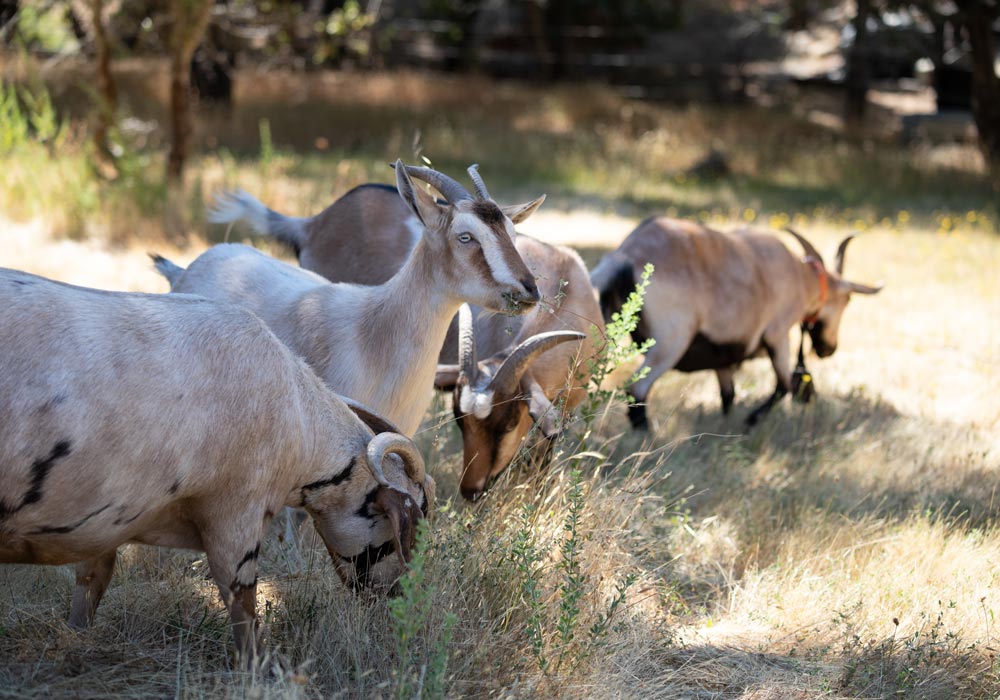
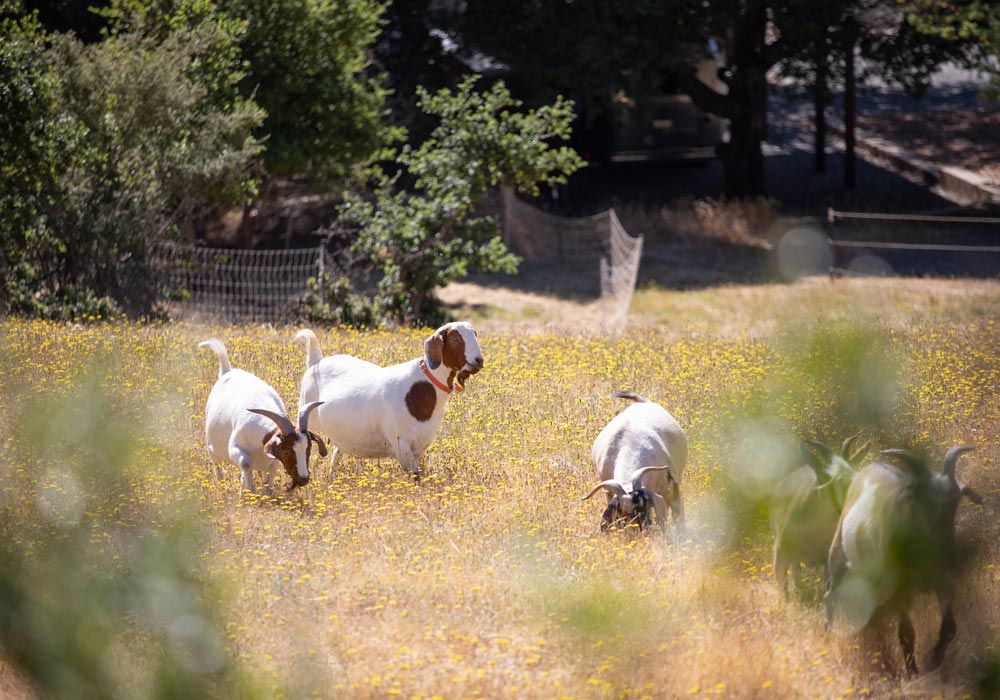
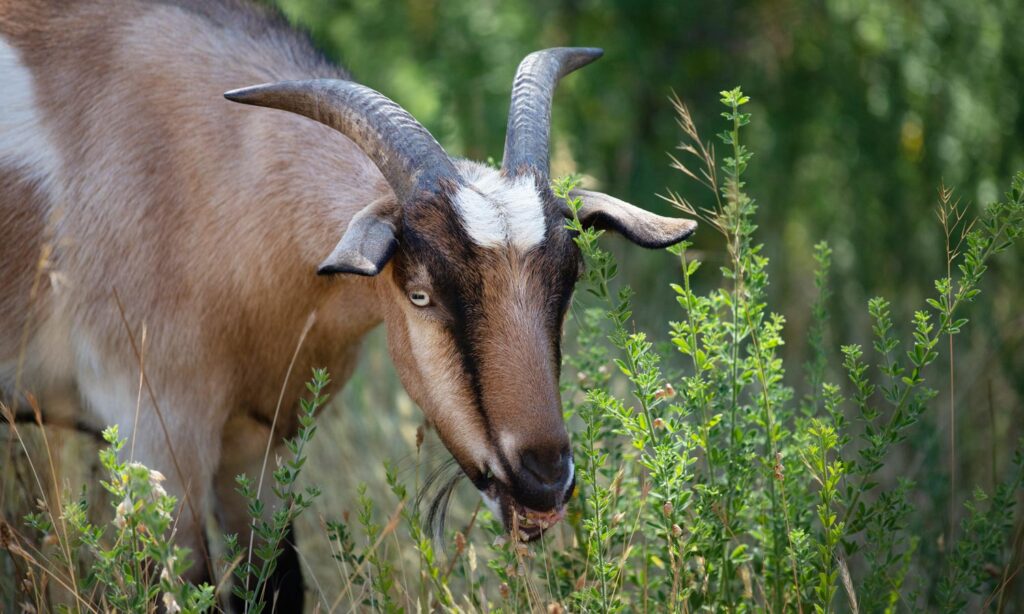
Rotating our goats across the land is now a daily practice. What I didn’t realize when we started is just how much the land needed intensive grazing animals. With each acre grazed, the small herd is stimulating the newly sprouted grasses, promoting further photosynthesis and, as a result, accelerating the soil’s intake of carbon dioxide from the atmosphere. And as the amount of carbon in the soil increases, so too does the land’s ability to absorb water—furthering its resilience to catastrophic wildfire.
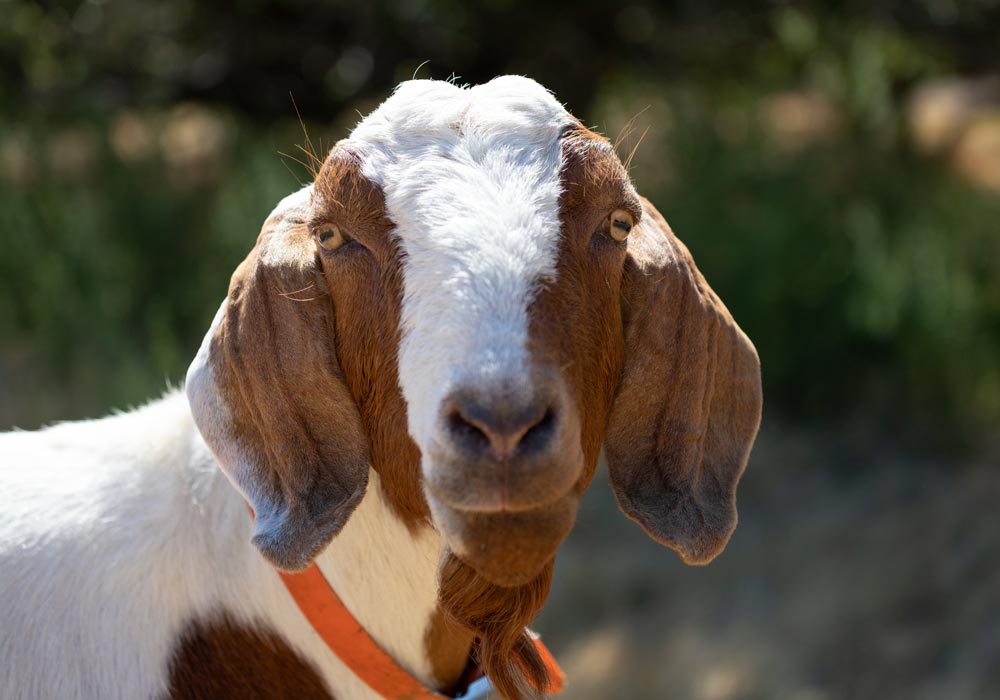
There’s a deep sense of satisfaction in revitalizing even this small corner of Marin County. Any improvement in the land’s vitality fuels my excitement for greater land stewardship, none of which is possible without my herd of knuckleheaded goats. What I’ve learned in these few years of goat wrestling is that ruminant animals—like goats, sheep, and cattle—have a significant role to play in tending to the health of our landscapes and protecting our communities from dangerous wildfires.
Tending to them is the best way to tend to the land.