Bob Giacomini: Some Jobs Are Never Finished
June 17, 2026
Somewhere in America right now, someone is pulling a wedge of Original Blue from their refrigerator. Maybe it’s on a cheese board in Chicago. Maybe it’s crumbled over a salad in New York. What they probably don’t know is that it came from a single ranch on Tomales Bay in Marin County — and that it almost didn’t exist at all.
Bob Giacomini is 88 years old, the patriarch behind Point Reyes Farmstead Cheese Company and the dairy where it all began. These days he lives in Petaluma, but still drives out to the ranch four or five days a week. His daughters run the business now. His grandson just joined. Two weeks before this conversation, his second great-granddaughter was born.
Ask him how any of it happened and he gives you the same answer every time.
“I’ve just been lucky.”
One winter afternoon in the late 1990s, Bob and his wife Dean gathered their four daughters around the kitchen table. He laid it out plainly — he wasn’t going to keep milking forever, and if nobody wanted to take over the dairy, they’d probably sell it and move over the hill.
His daughters had grown up on this ranch, left for San Francisco, and built careers of their own. They’d seen how hard their parents had worked, and none of them were interested in taking over the dairy. There was a long conversation. And then, somewhere in the middle of it, someone said the word cheese.
Three of the daughters leaned in.
They were the fourth generation drawn back to this place, carrying everything their family had built and adding what only they could. Bob’s father Waldo moved the family to Point Reyes in 1938, bought the Palace Market and used what he earned there to eventually buy a dairy just west of town. It was the same determination that had brought his own father Tobia from Italy around 1900 with maybe five dollars in his pocket. Bob grew up stocking store shelves after school, playing baseball in the lot next door, watching his family build their version of the American dream.
While he was at UC Davis studying agriculture he met Dean Mae Ferreira. They married in 1958 and spent their first year together in a little rented cottage in Inverness — “a little love shack,” he calls it, still smiling. The following year, with Waldo’s help, they bought the ranch on Tomales Bay and moved in: an old farmhouse from the 1920s, 710 acres, and a herd of cows that needed milking every day whether he was ready or not. Waldo came by once a month after that, just for dinner, never once asking how things were going.
“He basically threw me up here and said, run it. I could have totally failed — but my father had enough confidence in me.”
For forty years Bob and Dean ran that ranch through everything the industry threw at them. New environmental regulations arrived that the old hillside dairies were never built to meet. Central Valley competitors grew bigger. Land values climbed past anything milk could justify. Droughts hit hard. Much of the ranching community adapted — shifting from dairies to beef cattle, finding other ways to stay on the land. The dairies were dwindling.
Bob stayed and became one of the most respected voices in American dairy farming, traveling to national conferences, serving on industry boards, helping shape the future of a business that, at least locally, was shrinking around him. In 1997, the World Dairy Expo named him United States Dairyman of the Year, the highest honor in American dairy farming. A few years later, as a member of the Tomales Bay Watershed Council and the Marin Resource Conservation District, he helped bring dairymen and oyster growers to the table when runoff and water quality threatened to set them against each other.
When Bob and Dean bought this ranch, more than two hundred dairies operated in Marin County. Today, thirteen remain. Bob’s is one of them.
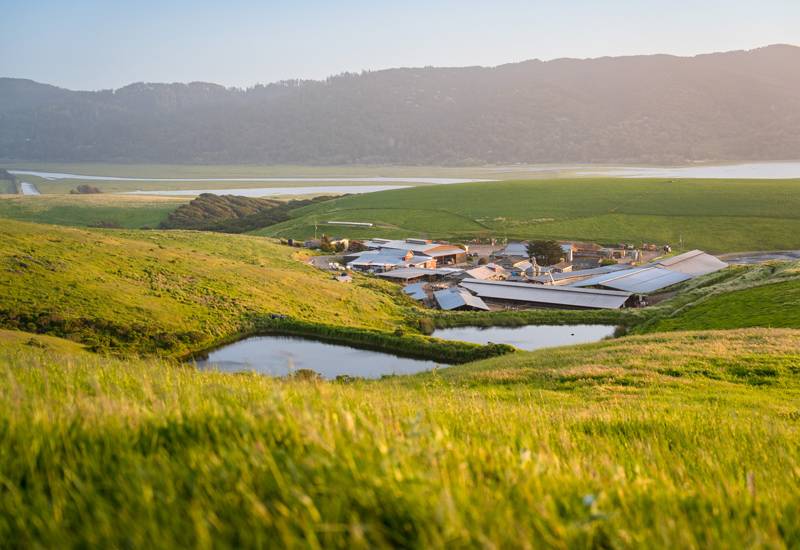
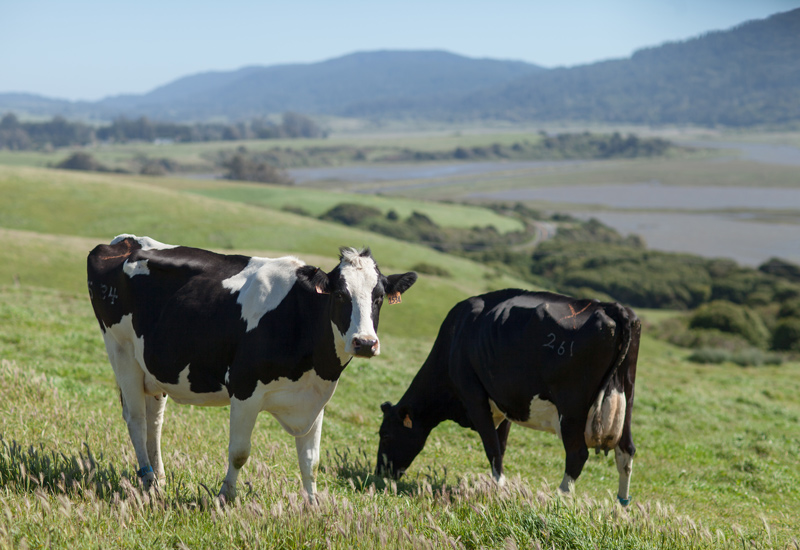
Some of the key ingredients — a closed herd, a patient hand, and 710 acres of fog and salt air above Tomales Bay.
And then, at that kitchen table, someone said the word cheese.
They’d come back, the daughters said, if they could make cheese. Over the next two years they canvassed chefs, consulted retailers, and discovered something nobody had yet figured out: there was no premium blue cheese being produced in California. Not one. They saw the hole and they knew exactly what could fill it.
They also knew what they had. Forty years of a closed herd of Holsteins grazing the pastures above Tomales Bay, in coastal fog and Pacific salt air that produced something you couldn’t replicate anywhere else. Bob had spent his whole life building that milk quality — a legacy of careful land stewardship, of local craftsmanship. The place itself was the ingredient.
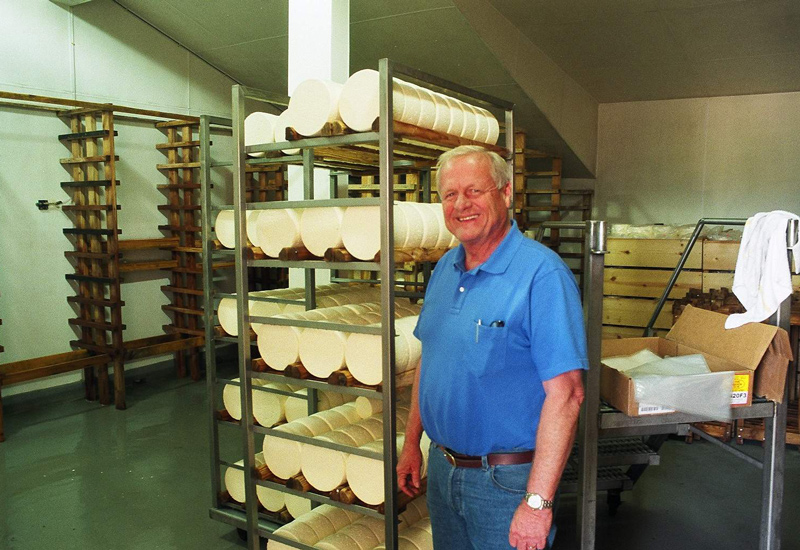
In June 1999 they began converting an old calf barn into a cheese plant. There was a big learning curve: classes, conferences, refining the recipe, all while raising their own families. For nine years distributors told them they were crazy to build a brand on a single farmstead cheese.
But they knew what they had and kept going, anchored in their family’s history of resilience and innovation. In August 2000 they made their first batch of Original Blue and sold the first pound where it all began. The Palace Market in Point Reyes.
“It’s not so much what you did with the ranch.
It’s what you did with your families.”
Today Original Blue — California’s first classic-style blue cheese — sits on cheese boards from San Francisco to New York, in the cases of the country’s finest specialty shops, and twice on Oprah’s list of favorite things. The company employs 125 people across two facilities and exports to Canada, Mexico, and throughout Asia.
He still calls it luck. But spend time with Bob Giacomini and something else comes through: a quiet recognition that he has arrived at this place in life because of the generosity of others. A father who showed his love through trust. A wife who ran the books and pushed him, to make the hard calls, to be the best man he could be. Three daughters who came home with their own skills and visions. A community that looked to him as the example, while he looked to his family.
That’s the thread he’s pulling forward now. About 95 percent of the ranch’s 125 employees are Latino, many of them there for years, building lives here the way the Giacominis have — rooted, quietly devoted to the land. Their children are growing up now. Bob recently started a scholarship program, funded from his own pocket, to help them get to college.
“It’s just a way of saying thank you,” he says. “And giving back.”
Last year Bob was named Grand Marshal of the West Marin Western Weekend parade. He’d played accordion on a float at that same parade as a boy.
There are not many people left here who carry that much history in one lifetime. Bob Giacomini is the living link between a grandfather who arrived here with almost nothing and a great-granddaughter born two weeks ago. Between a grocery store bought in 1938 and a cheese company selling in every state in the country. He is the hands in the middle, still passing it on.
When the interview was over, Bob’s truck was still parked outside the milking parlor. He’d gone to check on things. At 88 years old, there was still work to do.
Some jobs are never finished.
Bob Giacomini — A Life in Agriculture
• Named United States Dairyman of the Year, World Dairy Expo, 1997
• Board member, Marin Agricultural Land Trust, 1985–1996
• President, West Marin Lions Club
• Member and President, Western United Dairymen
• Chairman, National Dairy Board
• Grand Marshal, West Marin Western Weekend Parade, 2025
• Installed one of West Marin’s first methane digesters, 2009
• Helped forge collaborative water quality agreements between dairy operators and Tomales Bay oyster growers
• Co-founder, Point Reyes Farmstead Cheese Company, 2000
• Leopold Conservation Award recipient, Sand County Foundation, 2013