The Secret Lives of Grasshopper Sparrows

By Karisma Wilson,
Former Digital Marketing Manager
April 22, 2024
Hidden among the agricultural grasslands of Marin lies a fascinating inhabitant: the grasshopper sparrow (Ammodramus savannarum). Despite its small size and inconspicuous nature, this bird plays a significant role in the local ecosystem and is a subject of interest for bird enthusiasts and conservationists alike.
Grasshopper sparrows are small, stocky brown birds with vibrant orange and yellow facial markings. They are named for their unique insect-like buzzing and propensity for the insects they share a namesake with. Though once abundant in California, grasshopper sparrows, which build nests in tall patches of grass and stay well hidden, are now rarely sighted.
Dependence on Ranchlands
Grasshopper sparrows migrate through Marin’s grasslands during their breeding season from April to July before flying south to Mexico and Central America for the winter. They live in grasslands, prairies, hayfields and open pasture, preferring areas with clumps of vegetation mixed with bare ground. This makes many of Marin’s ranches the perfect habitat for these tiny avian visitors. Without the work of conservationists and ranchers in Marin, our native grasslands would be overtaken by species like invasive European grasses, coyote bush and Douglas fir.
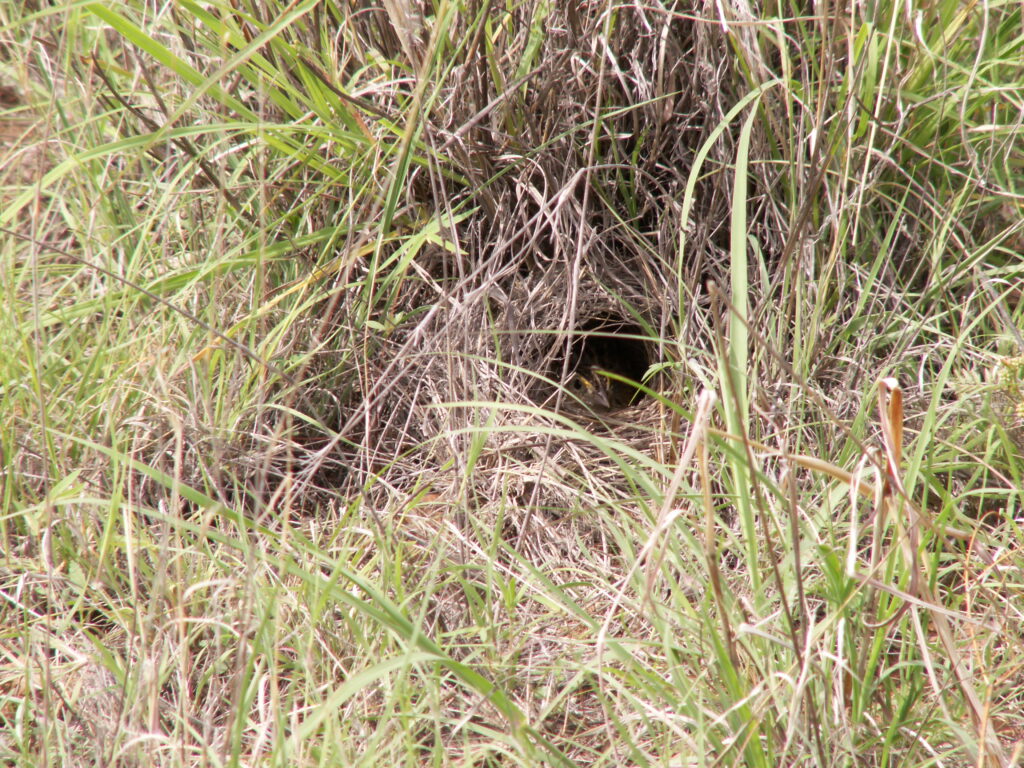 Female Grasshopper Sparrow in a Nest
Grasshopper sparrows depend on native grasses for habitat, because unlike the classic bird nest you might find high in a tree (or your gutters), these birds nest on the ground. Their domed nests are built like a cave, woven into the grass with a small entrance.
Active stewardship of grassland, through managed grazing and prescribed burns, is also mutually beneficial to humans, flora, and fauna in the areas these birds inhabit by reducing build up of invasive brush and other harmful plant material that can inhibit their nest building.
At Risk in California
The grasshopper sparrow has experienced extensive population decline and is designated a California Species of Special Concern. Breeding populations in particular are at risk. One of the biggest threats to these small birds is habitat loss, much of which has been converted for intensive agriculture or lost to urban development.
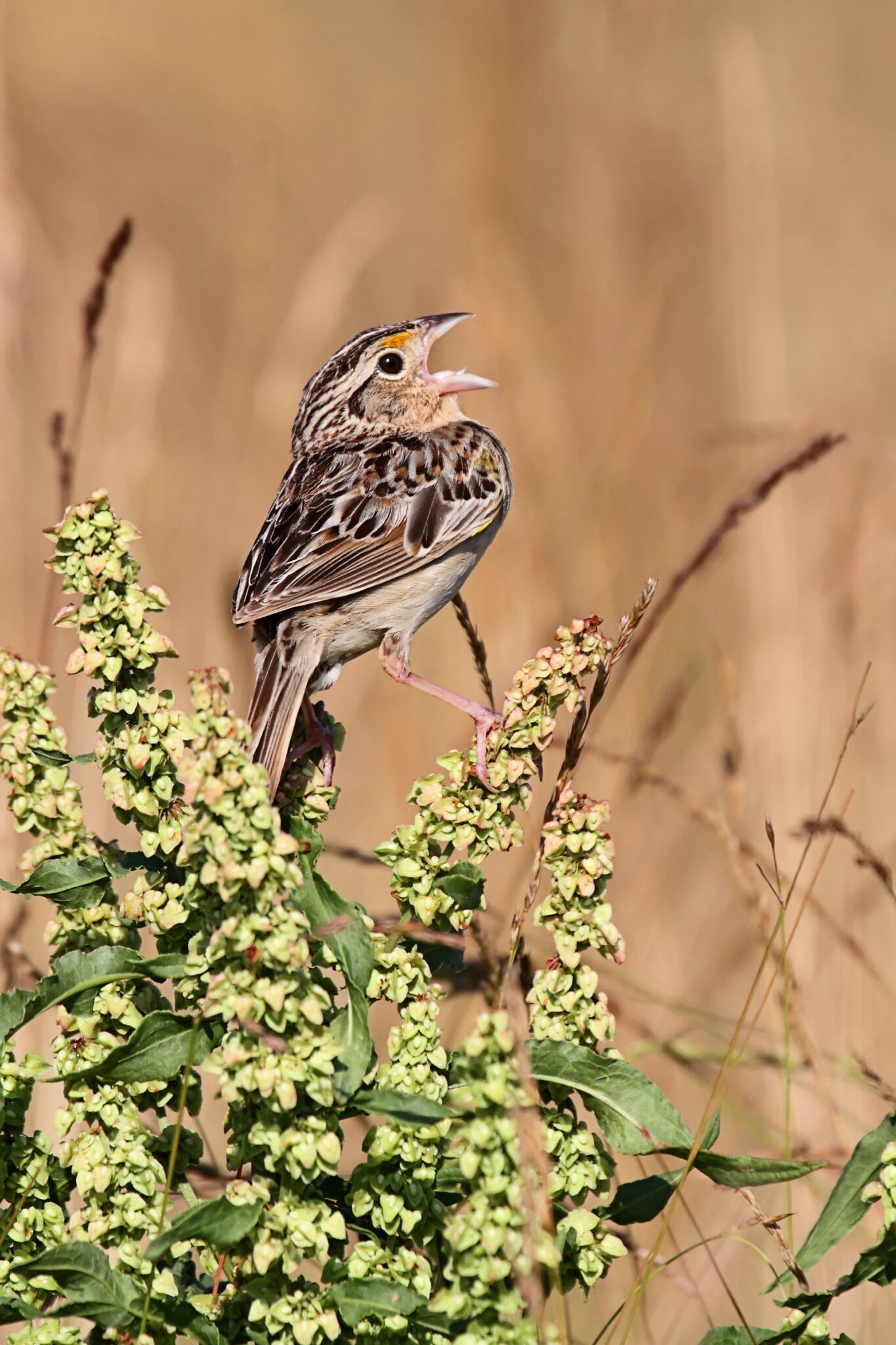 Grasshopper sparrow singing on a plant stalk
Grasshopper sparrows are especially vulnerable to habitat loss through habitat fragmentation, which is why it is crucial to preserve critical linkages through Marin’s open space and ranches. These diminutive birds require large swaths of land, preferring between 30 and 100 acres. This amount of contiguous land is often only found in national parks or protected rangeland.
Managing habitat for this species also benefits many other grassland birds, which are among the fastest declining groups of birds in North America. Grasshopper sparrow management practices can benefit nesting western meadowlarks, white-tailed kites, and American kestrels foraging for insects; golden eagles and ferruginous hawks hunting for small mammals during the winter; short-eared owls roosting in the long grasses; and burrowing animals, such as badgers and burrowing owls, ultimately improving biodiversity across the region. Even birdwatching and habitat monitoring can contribute valuable data to conservation efforts.
Spotting Grasshopper Sparrows
These birds spend most of their relatively long lives foraging among their hidden, grassy homes, eating a variety of insects, beetles, and spiders in the summer and searching for seeds on the exposed ground in the winter. Their markings and tawny brown feathers give them the perfect camouflage to explore among the dense grass cover.
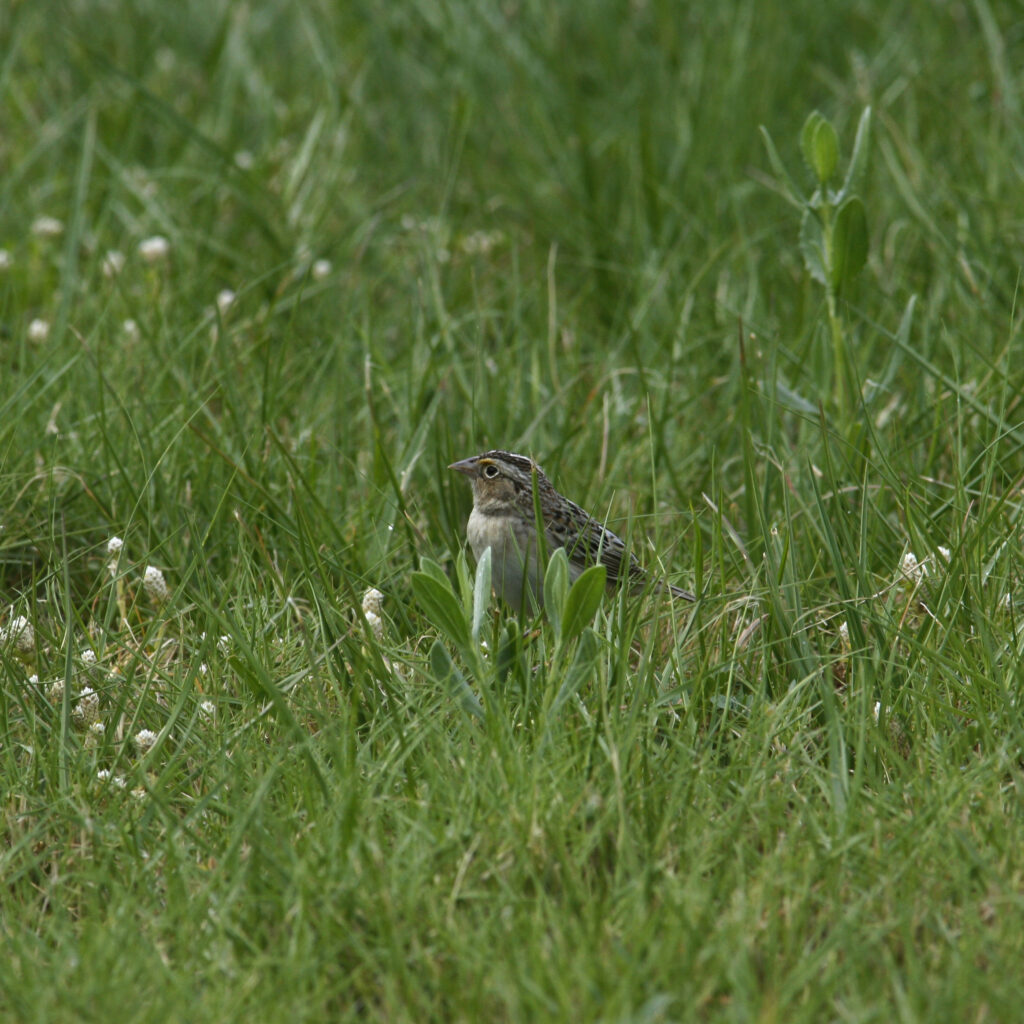 A grasshopper sparrow in the grass
The best time of year to see these secretive birds in Marin is in early spring. As the wildflowers are blooming, the males are known to perch on top of the stalks while singing their distinctive songs. There are several steps you can take to help preserve and create grasshopper sparrow habitat in your area.
The grasshopper sparrow may be somewhat secretive, but its presence enriches the biodiversity of Marin and serves as an indicator of healthy grassland across the nation. By understanding its habitat requirements, behavior, and conservation needs, we can ensure the long-term survival of this elusive bird and the ecosystems it inhabits. Whether you’re an avid birder or simply enjoy exploring nature, keep an eye (and an ear) out for the subtle beauty of the grasshopper sparrow on your next outing this spring.
 Grasshopper sparrow perched on milkweed
Since its founding in 1980, the Marin Agricultural Land Trust (MALT) has been working with local landowners to acquire voluntary agricultural conservation easements. These easements protect the land’s conservation values while also requiring that it remains in agricultural production. To date, MALT has secured 93 easements totaling more than 55,700 acres of farm and ranchland.
This working landscape also plays a pivotal role in sustain our precious biodiversity. Through this land’s careful stewardship, we can ensure the highest number of habitats are sustained and help cultivate the conditions needed for flora and fauna to thrive. Discover more here.